Should I Put My Signature on Art I Make at Work
Sign Your Art
So People Can Read Information technology
and Other Helpful Tips
Signing your art is an integral part of the creative process. The instant you lot apply your name to a piece of your art, you declare information technology to be officially done and ready to go public. No matter what your signature looks like, what form it takes or where y'all put information technology, no work of your art is consummate without ane.
Your signature identifies your art for all time equally having been created, completed, and canonical of by y'all and you lot alone (with the exception of collaborative works, of course). When someone wants to know who created your art, your signature tells them. When someone sees your art for the commencement time and wants to know who the artist is so they can see more or learn more than, your signature helps them discover you. When y'all're not around to identify your art (and sooner or later yous won't be), your signature identifies it for you.
Unfortunately, far too many artists treat signing their fine art as little more than an afterthought or inconsequential deed, like signing a cheque or a credit card receipt, like putting your proper noun on it inappreciably even matters. But underestimating the importance of your signature and the moment of signing tin can lead to all sorts of problems later on on in a work of art's life. This is peculiarly true the better known or more than famous you eventually become.
The near serious signature trouble? Not signing your fine art at all. Believe information technology or non, a significant number of artists these days don't even bother to sign their fine art. Why? Possibly they think their work is and so identifiable that everyone will automatically know who did it. Maybe they think everyone already knows who they are and what their art looks like. Peradventure they think everyone will continue to know these things for all eternity. Well guess what? Perchance they're wrong. Then rule number 1-- and by far the most important dominion-- sign your art. Period.
The second virtually serious signature problem? Names signed then illegibly that the only people who can identify them are those who already know the artist and know what the artist's art and signature expect like (they tin can't actually read the signatures in most cases; they just know how they look). Anyone outside the immediate inner circle who knows little or zip most the artist is pretty much screwed.
Artists sign their names illegibly for a variety of reasons, similar to the reasons of creative person'due south who don't sign their fine art at all. Some recollect unreadable signatures wait expert, some practice information technology to impress people, others think their work will always be identifiable as theirs whether or not anyone can read or recognize their names or not. Nevertheless others experience that an unreadable signature has a mystique or caché almost it, an "only special people can read information technology" quality. Maybe, like some of the artists who don't sign at all, they they believe their work is universally recognizable and no one volition ever forget who they are or ever question who made their art. The truth about that? Nothing is farther from the truth.
To summarize, rule number 1 is to e'er sign your art. Information technology can be on the back, the bottom, the sides, the edges-- anywhere as long as it's in that location. And dominion number two is to sign your name conspicuously enough then that anyone tin can read it. To echo: Sign your proper noun and then anyone can read information technology. If you like signing illegibly on the front, that's fine as long as yous make sure you clearly sign or otherwise label or place yourself as the artist somewhere else on the fine art.
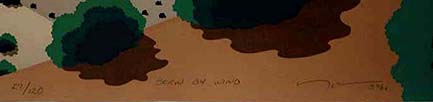

Sadly, so many artist signatures on all kinds of fine art, dating from all time periods, are then hard or impossible to read that they've become a meaning problem in the concern, and trying to identify them, an manufacture in itself. In that location are even websites and databases defended solely to artist signatures like John Castagno'due south https://artistssignatures.com containing over 100,000 signature examples past 65,000 artists. But as good as that database is, it'southward far from comprehensive. FYI, I really offer a service where I accuse a fee to identify indecipherable signatures (and simply charge if I make positive identification, which sometimes I can, but many times I can't).
How does art lose its identity fifty-fifty though people almost e'er know who the artists are when they buy? To brainstorm with, people purchase art all the time purely for their own enjoyment, and never tell anyone who the artists are. During the life of the art, many art owners either lose or misplace their receipts or documentation, or only throw them out. People buy art all the time and forget who the artists are. People sell, donate, merchandise, transfer or otherwise give away art all the time without ever informing the new owners who the artists are-- similar when they move or downsize their residences, redecorate, have m sales, or when they just plain get tired of looking at information technology. Art can also lose its identity when it changes easily through decease, divorce, inheritance, as gifts, and and then on.
Hither's a perfect case of what I'm talking about. Permit's say someone buys a piece of art with an illegible signature for a hundred bucks at an creative person's showtime show just considering she likes information technology and can afford it (the artist, of course, is totally unknown at the time). The buyer doesn't really follow the career of the artist and some years later because she'due south moving or her tastes take inverse or whatever, she gives the art to an acquaintance who happens to like the fashion it looks. The new owner doesn't ask who it's by, doesn't really care, and the original possessor doesn't bother mentioning who did it (assuming she fifty-fifty remembers) considering after all, she got it cheap and it was no big deal at the time. The creative person was a nobody. Meanwhile, let'southward say the creative person has now become relatively famous, and that piece of fine art is at present worth $50,000. Are y'all first to get the movie? Believe it or not, things similar this happens a lot more often than you lot might think.
If artists had any thought of the fates that befall unsigned works of art fine art or those with signatures that can't be identified, a lot more artists would sign their art clearly and legibly. Information technology's not like people don't try to effigy out who fabricated unsigned or illegibly signed art. They try to decipher the names past looking at them. They search randomly online, ask artists or gallery owners or other art professionals if they recognize the art or the names, endeavour to locate similar looking artworks online, or even hire someone who offers identification services to decipher them (like me; I signature ID requests all the time).
Whenever a work of art ends upwardly in circumstances like this where nobody knows, remembers or can identify the artist, and nobody really likes or cares all that much about it (forget about how proficient it may be or how famous the artist is), it ends up at flea markets, garage sales, auctions, the Salvation Army, Joe'southward Maison de Junk, in the garbage, in the fireplace, garages, attics, gathering mold in basements or outbuildings, getting crammed into storage lockers, protecting barbeque grills from the rain, or condign toys for little Billy-- you proper noun it.
Exercise you want to jeopardize your art's future simply because you don't want to sign it or you like signing in ways that are difficult to read? I incertitude it. And don't think that only because you're known in certain circles or even nationally or internationally for that matter that your fine art is prophylactic forever. Not even fine art by the virtually famous artists in the world is identifiable by everyone. Wayward works of art by famous artists are rediscovered all the time, and exercise yous know the main reason why? Because luck has it that someone somewhere with adequate noesis of what they're looking at tin identify either the styles or the signatures and rescue them. Sadly, luck does not always come to the rescue. In fact, it often doesn't. In all those cases where no guardian affections or knowledgeable savior comes along in time, that art is off to oblivion. The moral of the story? Sign your art clearly or risk the consequences.
Additional tips and pointers for signing your art:
* Art by artists who sign with initials, monograms, and symbols frequently meets fates like to illegibly signed art. Here again no matter how in dearest you are with a cryptic or mysterious way of signing, clearly sign or otherwise place yourself elsewhere on the art.
* Sign your art in the same medium in which yous create it (except for graphics or limited edition prints or photographs, which are by and large signed in pencil or ink). For instance, sign a watercolor in watercolor, an acrylic in acrylic, and an oil painting in oil paint. When you sign in a dissimilar medium, yous increase the chances that someone will eventually question whether or not the art was really done past yous, or even signed by you. These days, being able to conclusively determine whether works of fine art are genuine and accurate is more important than e'er. So do what you can to make that job every bit easy as possible.
* Placing your signature or monogram into the compositions of graphics, digital prints, or limited editions in addition to signing them by hand provides an extra means of identification and can as well "brand" your piece of work or even protect it against people who may try to forge or copy it. FYI, art forgery is a bigger problem than ever and forgers don't only forge signatures of famous artists; they forge signatures by all kinds of artists in all mediums and toll ranges all the time.
* Sign all of your fine art in basically the same style. Signatures should exist consequent in size, coloration, location, style (whether written or printed, for instance), and other particulars. That fashion, people who aren't necessarily familiar with all the styles of art y'all've produced over your career will at least be able to recognize your standardized way of signing, and therefore place it as existence past you. The problem with not standardizing but instead signing your name in many different styles or locations during the course of your career is that you ultimately brand your art harder to identify, and easier for forgers to sign fakes yet they desire and claim they're by y'all. Standardizing your signature makes it easier for authenticators and experts to conclusively determine your art is past you.
* Date your art. You may not think this is of import now, but after you lot've been making art for several decades or longer, you'll understand why. If you don't want to date your fine art on the forepart, date it inconspicuously on the back-- or even on the border. Plain, dating your art minimizes any guesswork as to when something was completed. Besides, the ameliorate known y'all go, the more than important dates are for anyone interested in your evolution as an artist... and that includes the curators who will one 24-hour interval be organizing your retrospectives.
* Provide additional hand-written or paw-applied information somewhere on the fine art. This may include a title, an inventory number, a annotate, a location where the art was fabricated, and and so on. If you exercise this consistently, not simply does information technology brand your art easier for experts to identify, only it also makes information technology more difficult for forgers to forge.
* If y'all make works on paper, you lot may desire to use an embossing stamp, insignia, your fingerprint, or a digital identifier in addition to paw-signing information technology, thereby making the human action of completion more than formal and official. Art with your signature and a stamp or a fingerprint or some other identifying characteristic is also more difficult to replicate, fake, or copy.
* Sign your art as soon as its done, preferably while the paint or clay or any medium it'southward in is still wet or pliable. Collectors prefer signatures that are "embedded" into the art considering those types of signatures are the most difficult to forge or indistinguishable. Furthermore, the sooner you sign completed works, the more you lot're in the "zone" in which you created the art, and the more unified and harmonious the signature is with rest of the composition. The longer y'all wait to sign, the less the signature tends to match the overall tone or experience of the piece. At worst, signatures applied well later the fact tin can actually detract from the overall appearance of the art.
* Don't sign on meridian of a varnished painting or completed sculpture considering the signature volition look like information technology was added later or more as an afterthought than a proclamation. Signatures like that are more than decumbent to existence questioned.
* Your signature should not be then assuming or overbearing that it actually interferes with or detracts from the composition (unless you purposefully intend for that to be a defining feature of your art). It should alloy rather than dissimilarity or conflict with its surroundings and look like it belongs or "lives" within the art.
* Don't scratch your signature into stale pigment, ceramic, or similar media unless this is how y'all normally sign. Scratched signatures rarely alloy with their art and their actuality tin also be hands questioned.
***
No affair how diligent yous may be well-nigh keeping track of your work, you're non e'er going to know where every piece of your art is or where its journey will end. And you certainly won't be around for all eternity to vouch for it. Those who purchase your fine art today will not necessarily own it tomorrow (or even recollect that you were the creative person). Regardless of where your fine art ends up or who eventually owns it, make certain information technology e'er will exist treated with the intendance and respect it deserves, and never relegated to "I don't know" or "I have no idea" or "I can't remember" categories, and end up in the "Let'southward get rid of it" pile. By taking the signing your art seriously today, you lot maximize the chances that people will be able to identify, capeesh, cherish, enjoy, and retrieve you through your life'southward piece of work for countless generations to come up.
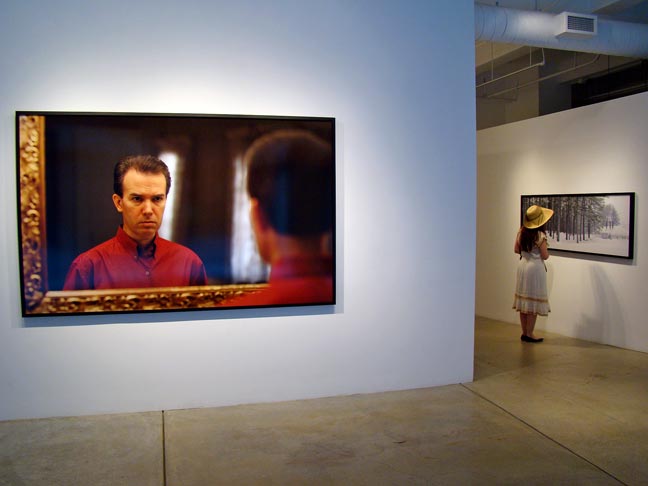
(photography by Carlos and Jason Sanchez)
Source: https://www.artbusiness.com/signart.html
0 Response to "Should I Put My Signature on Art I Make at Work"
Postar um comentário